Cambridge Is Not Boston
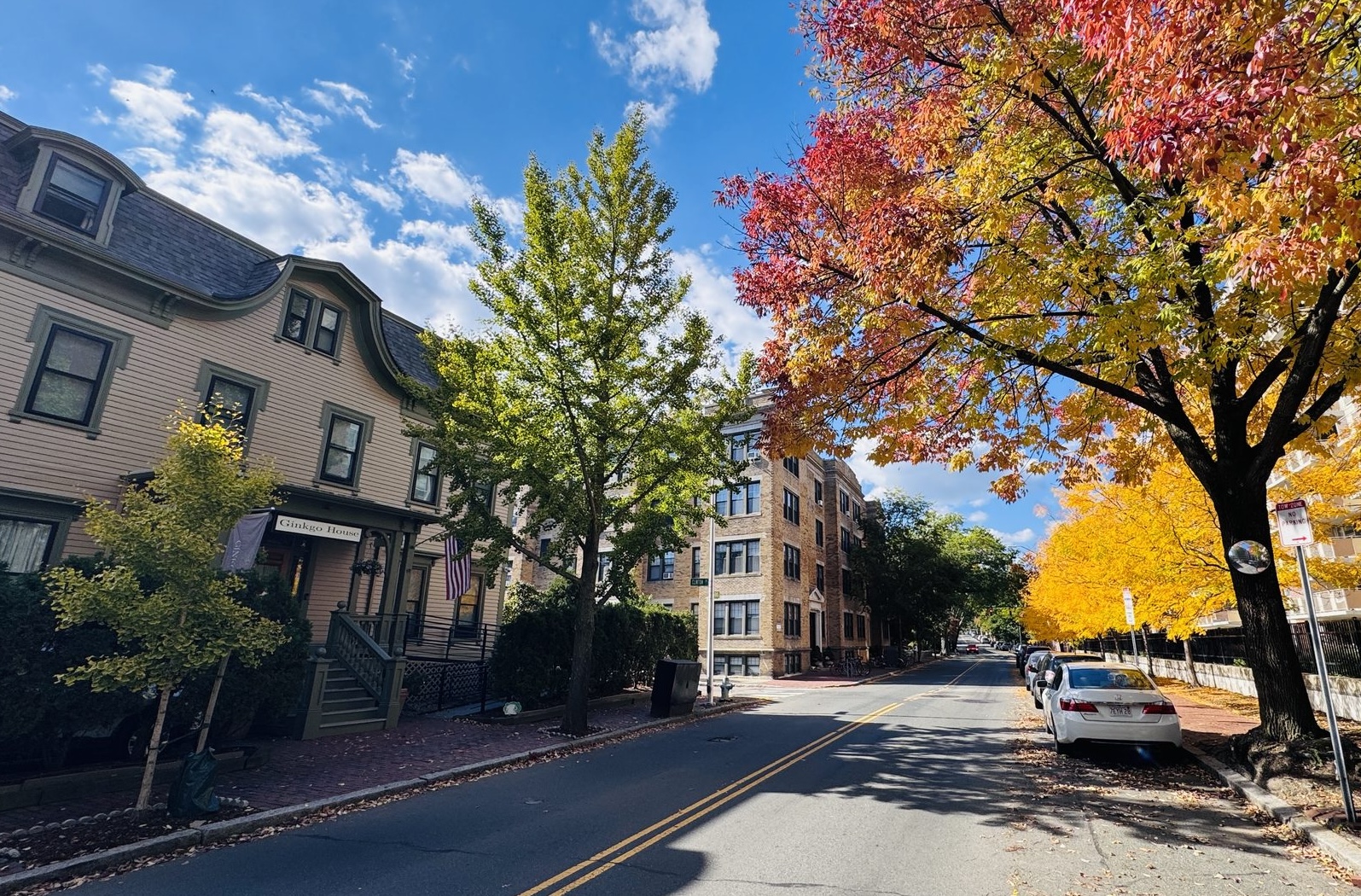
A surprising number of visitors treat Cambridge as an extension of Boston — a neighborhood across the river where Harvard happens to be. This is the wrong mental model. Cambridge is its own city, with its own character, its own rhythms, and its own neighborhood geography that takes a little time to decode.
The best way to understand it is to walk it. Here is a guide to doing that well.
Start at Harvard Square
Harvard Square is the obvious starting point, and it rewards more time than most visitors give it. The T stop drops you at the center, and from there the square fans out in every direction.
Spend time on Brattle Street heading northwest — this is the historic “Tory Row,” a stretch of Colonial-era mansions that housed British loyalists before the Revolution. The architecture is exceptional and almost entirely residential. Walk to the end and you reach the Cambridge Common, where Washington took command of the Continental Army in 1775.
Cut south into Harvard Yard through Johnston Gate (the main brick entrance on Massachusetts Ave). The Yard is the oldest part of the university — the buildings range from 17th-century to 20th-century, and the contrast is striking. John Harvard’s statue near University Hall is the traditional target for photos; students rub the shoe for good luck before exams. The toe is very shiny.
On the other side of campus, Quincy Street runs past the Harvard Art Museums (worth 2+ hours), the Carpenter Center for the Visual Arts (Le Corbusier’s only building in North America), and the Memorial Hall — a massive Victorian Gothic structure built after the Civil War that most visitors walk past without entering. Walk in. The interior is one of the most dramatic spaces in Cambridge.
Inman Square
Inman Square is about a 20-minute walk from Harvard Square heading east on Hampshire Street, and it is where Cambridge residents actually eat and drink when they are not trying to impress anyone. There are no tourist shops. There is no foot traffic from the T. There are good restaurants, an excellent hardware store, and a few bars that have been in continuous operation for decades.
Highlights worth knowing:
- Bukowski Tavern — Local dive bar institution. The beer list is serious; the vibe is unpretentious.
- Christina’s Homemade Ice Cream — A Cambridge original with flavors that rotate seasonally and occasionally make no sense (adzuki bean, burnt sugar, Mexican chocolate). It works.
- Oleana — Ana Sortun’s Mediterranean restaurant, consistently one of the best in the Boston area. If you can get a reservation, take it.
Porter Square and Somerville
One stop north on the Red Line from Harvard, Porter Square is a different pace again. Quieter than Harvard Square, with a mix of Japanese restaurants (there is a legitimate cluster of Japanese-owned businesses here — a ramen shop, several izakayas, a Japanese grocery), independent bookstores, and the kind of cafes that students actually study in rather than perform studying in.
Cross into Somerville and you reach Davis Square — another stop up the Red Line. The Somerville Arts Council has made Davis one of the better places in the metro for public murals and small gallery programming. The burrito at Anna’s Taqueria here is a near-religious experience for anyone who grew up in Cambridge.
The Charles River
The Charles River path runs along the Cambridge side of the river from the Boston University Bridge up through Watertown, and it is one of the genuinely lovely urban walks in New England. On weekday mornings you share it with rowers, joggers, and the occasional dog. On weekend afternoons in spring it is busier, but never unpleasant.
From Harvard Square, reach the river by walking down JFK Street toward the John W. Weeks Bridge — a pedestrian bridge connecting Cambridge to Boston with good views in both directions. Cross it, walk south along the Boston side, and cross back via the Harvard Bridge near MIT.
MIT Campus
A 25-minute walk east from Harvard Square along Massachusetts Avenue, MIT’s campus rewards wandering even if you have no connection to the school. The architecture is genuinely varied and often remarkable — the Frank Gehry-designed Stata Center (32 Vassar St) looks like a building that collapsed and decided to stay that way. The Kresge Auditorium (Eero Saarinen, 1955) is one of the finest small concert halls in New England.
The MIT Museum (314 Main St, Kendall Square) is worth an hour: good permanent collections on artificial intelligence, robotics history, and holography. The holography collection in particular is something you cannot experience anywhere else.
A Few Practical Notes
- Cambridge’s sidewalks are old brick. Comfortable shoes are not a suggestion.
- The city is genuinely safe to walk at any hour, but the area around Central Square can feel gritty late at night.
- Most of what is worth seeing is within a 2-mile radius. You do not need a car.
- If you get lost, the Charles River is south and the main university buildings are west. That is enough to reorient yourself.
Cambridge’s best quality is that it contains multitudes without resolving them into a single identity. It is a college town that is also a research hub that is also a residential neighborhood that is also one of the stranger places in New England. Walking is how you find that out.