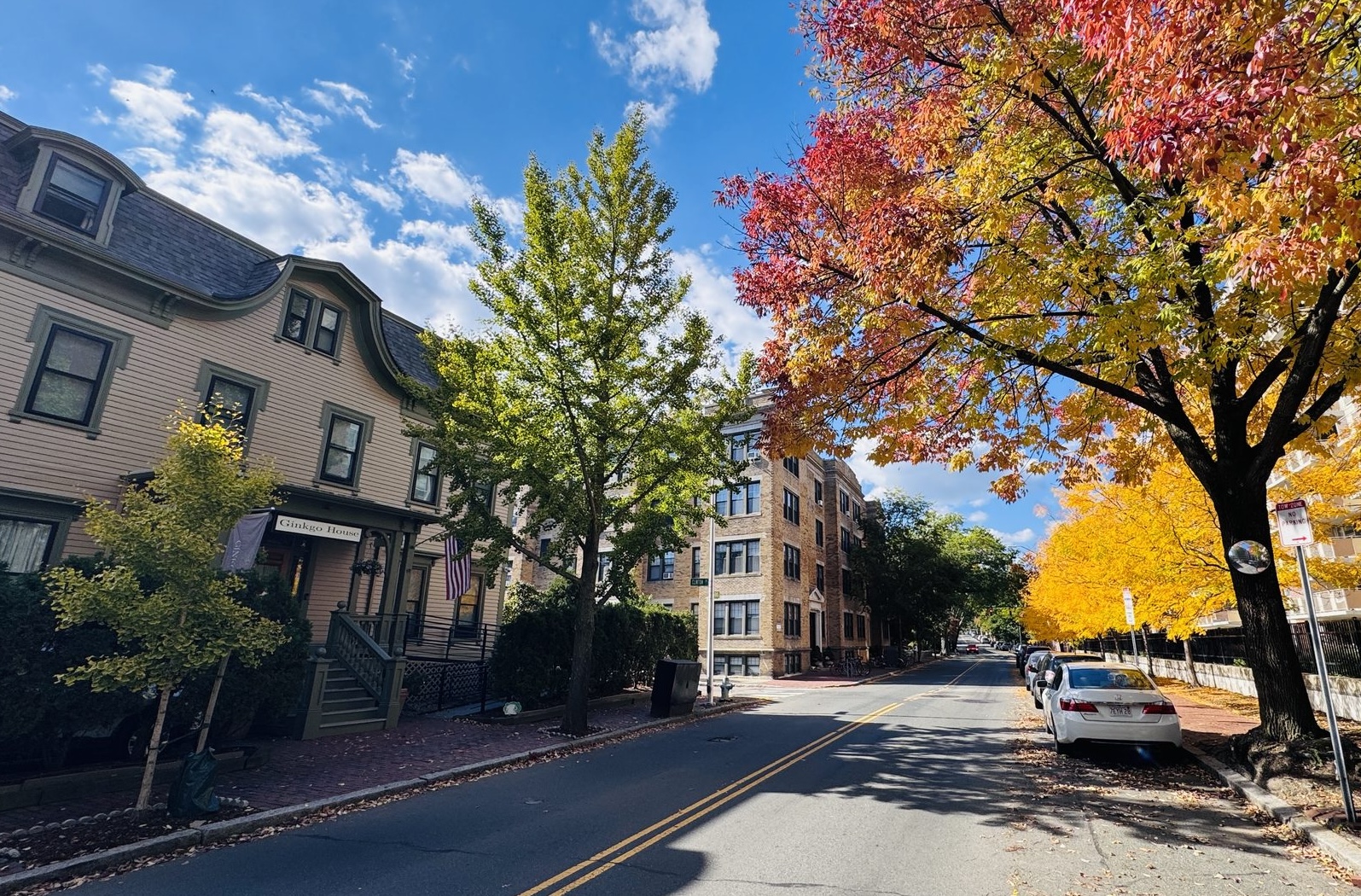
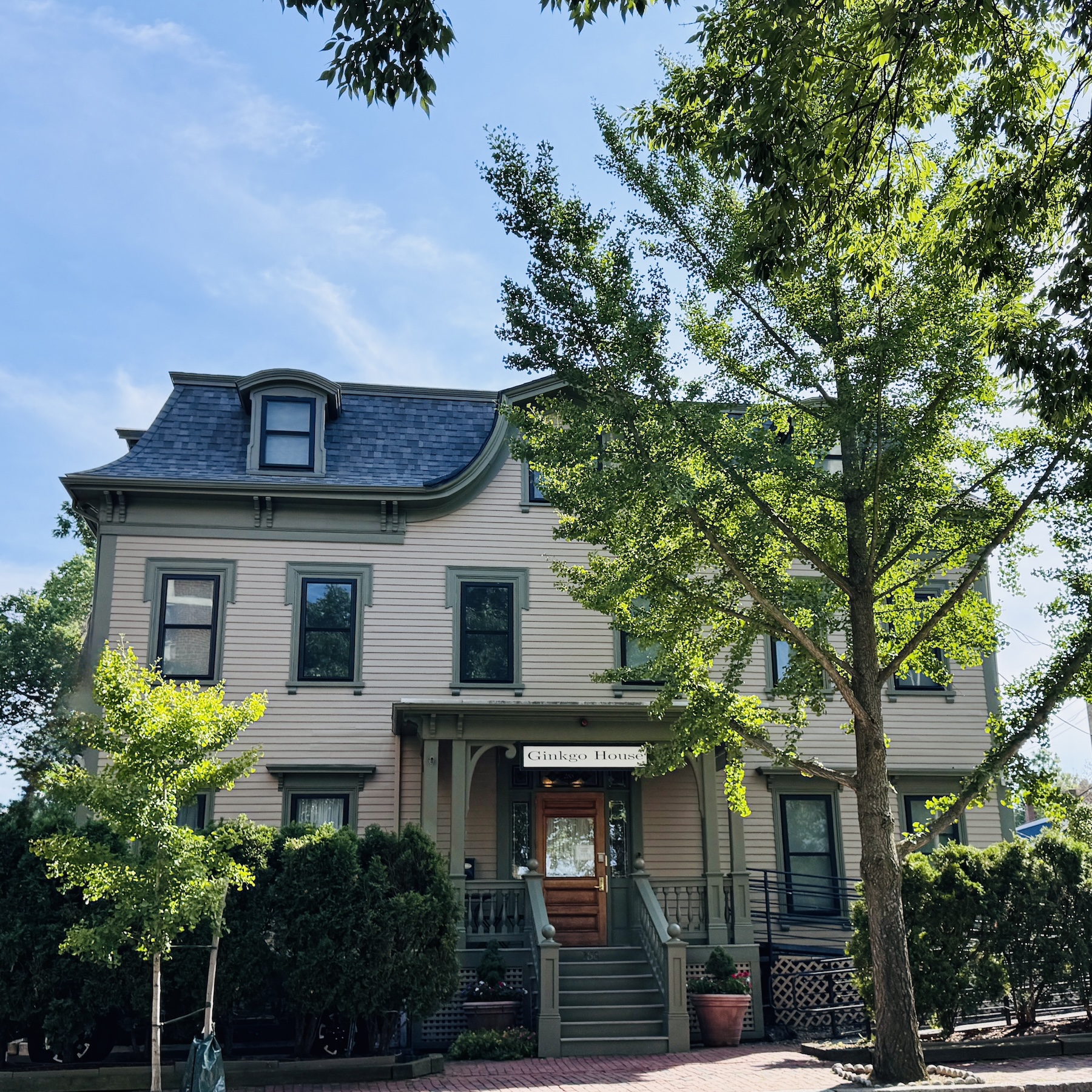
If you’ve walked past 288 Harvard Street recently, you may have done a double take.
Ginkgo House has a new look — and it didn’t happen by accident.
A Building Worth Preserving
The house was built in 1867. That’s not a footnote — it’s the whole point.
Cambridge has changed dramatically in the decades since. Kendall Square has transformed into a global biotech hub. High-rises have replaced entire blocks of Victorian-era homes. The pressure to tear down and build up has been relentless, and many historic buildings across the city simply didn’t survive it.
288 Harvard Street did. And when the current management took ownership, the commitment was clear from the start: this building would not just be maintained — it would be stewarded. There’s a difference. Maintenance keeps a building standing. Stewardship keeps it meaningful.
That responsibility shapes every decision we make about this property, including what color to paint it.
The Color of the Tree
The new palette is sandy warm on the body, with a muted olive green on the trim, railings, and architectural details. If that combination looks familiar, look up.
The ginkgo tree — Ginkgo biloba — is one of the oldest living species on Earth. In summer, its distinctive fan-shaped leaves are a deep, quiet green. The kind of green that doesn’t shout. It just stays.
We wanted the building to wear that same quality. Understated. Rooted. Unmistakably itself.
The sandy body picks up the warm light that filters through a ginkgo canopy on a Cambridge afternoon. The olive trim echoes the leaves. Together, they make the building feel like it grew here — which, in a sense, it did.
Working with the Cambridge Historical Commission
Changing the exterior of a 159-year-old building in Cambridge isn’t something you do lightly — nor should it be.
We worked closely with the Cambridge Historical Commission throughout this process, committed to preserving the character of the neighborhood rather than simply imposing a new look. Eric Hill of the Cambridge Historical Commission coordinated a site visit with a team of color specialists, who walked the property and offered recommendations grounded in both the building’s architectural history and the surrounding streetscape.
The result is a palette that feels native to Harvard Street — not a disruption, but a refinement. One that honors the block’s identity while giving this particular building a voice that is finally, unmistakably its own.
Come See It
The building looks best in the late afternoon, when the light hits the sandy siding and the ginkgo trees cast long shadows across the front porch.
We think you’ll agree it was worth the wait.