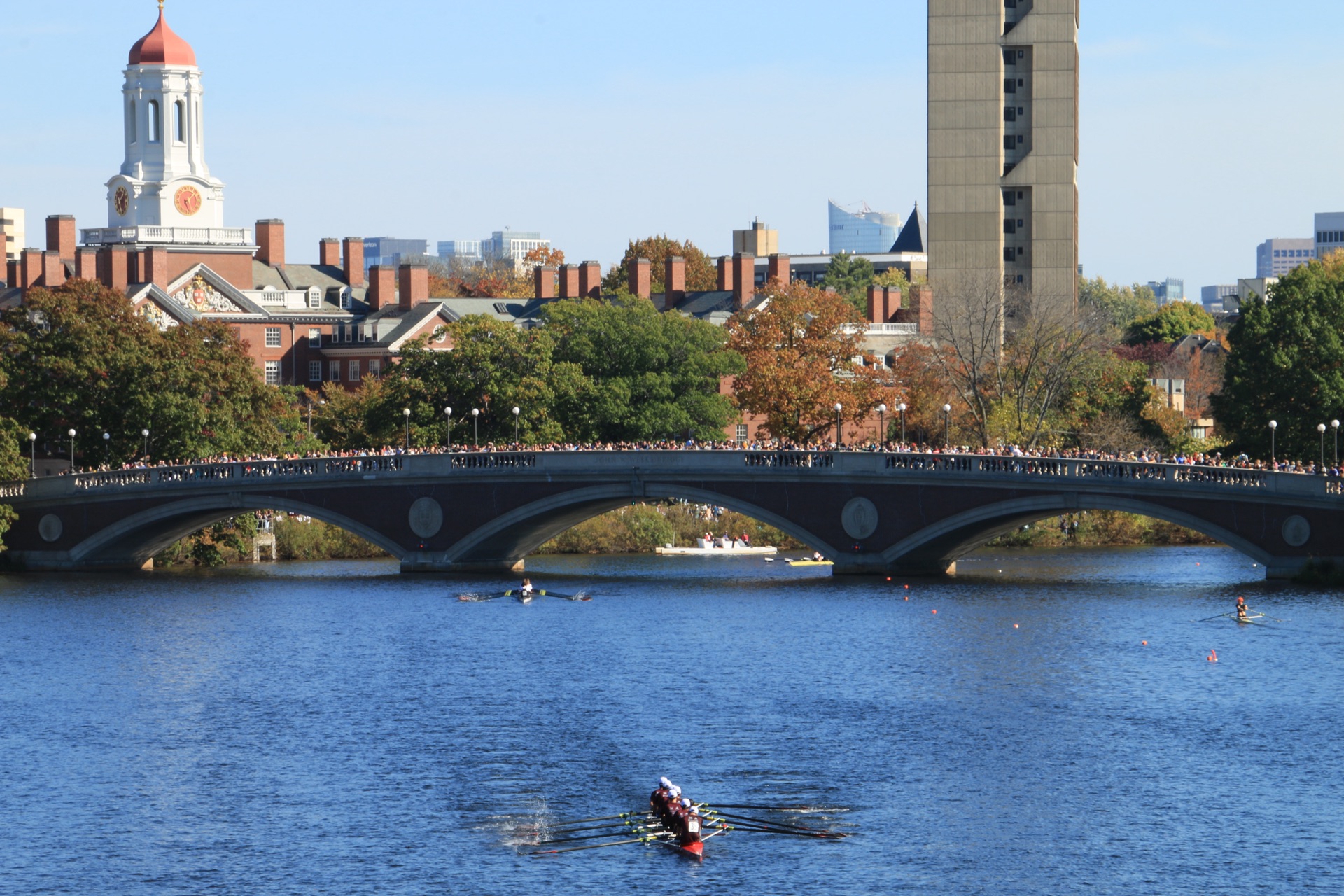
Every October, the Charles River between Boston and Cambridge turns into the busiest racecourse in rowing. The Head of the Charles Regatta brings thousands of rowers from around the world, and hundreds of thousands of spectators line the bridges and riverbanks to cheer them on.
Most guides to the regatta are written from the riverbank. This one comes partly from the water. In October 2022, I raced the Head of the Charles in a club eight. I can tell you exactly what those famous bridges look like from a racing shell, which spots are worth fighting the crowds for, and the one thing nobody warns rowers about. (We'll get to that.)
How the Head of the Charles works (in 30 seconds)
The "Head" is a head race: instead of crews racing side by side, boats start one at a time, a few seconds apart, and race the clock over a winding course of about 3 miles (4.8 km) upstream. The fastest time wins.
That format is why it's such fun to watch. Faster boats constantly chase down slower ones, and the overtaking happens in the tightest places on the river: under the bridges and around the bends. If you want drama, watch where the river narrows.
1. Weeks Footbridge (my favorite)
If you only go to one spot, make it this one. Weeks is a pedestrian bridge near Harvard Square, so you can stand right above the crews as they come through the arches, with Harvard's riverside houses and boathouses behind them and the river curving away on both sides. The course bends here, so you'll see coxswains working hard to hold their line.
It's also the liveliest scene on the river. The banks around the bridge fill up with tents handing out free swag, plenty of food stands, huge crowds and what feels like every dog in Greater Boston. There are also plenty of porta-potties, a detail I noticed from the water with deep, personal envy. (More on that below.)
Rower's note: From the boat, the bridges are loud. The cheering echoes under the arches, and for a few seconds it feels like the whole city is yelling at you. It's wonderful and slightly terrifying.
From Ginkgo House: about a 20-minute walk down to the river.
2. Anderson Memorial Bridge
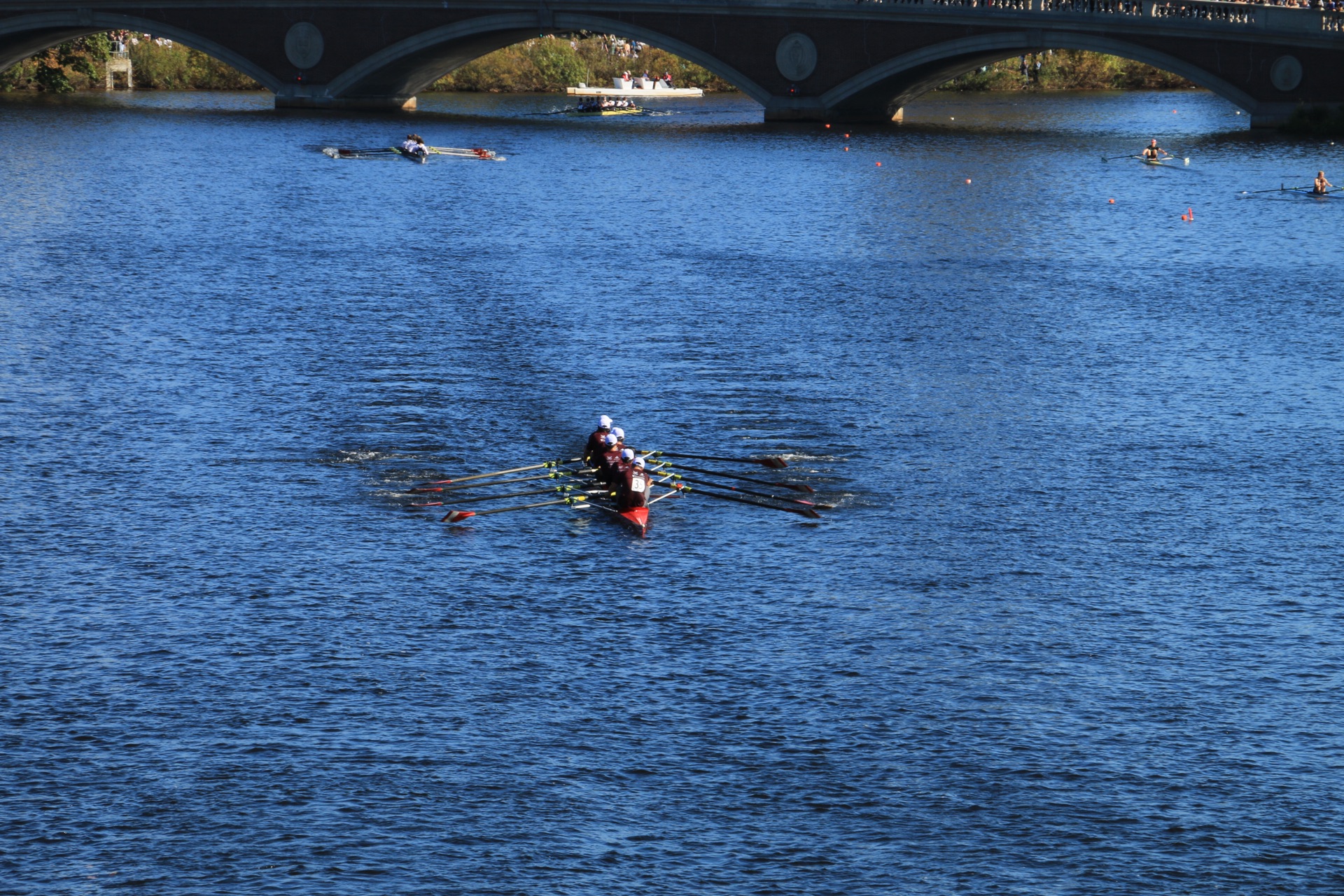
Just upstream of Weeks, the Anderson Bridge (on JFK Street) gives you a wide view down the river toward Weeks and the crews coming at you. It's busy but roomy, and it's the easiest bridge to reach on foot from Harvard Square.
Rower's note: Bridges are where boats get dangerously close. In my race, as we passed under one of them, a teammate's oar crossed blades with an oar from the boat next to us, and our boat almost flipped. We stayed upright. Not every crew did that day: we passed one that had capsized mid-race. Watch the bridge arches and you'll understand why coxswains age faster in October.
3. Eliot Bridge and the Eliot Turn
If you want to see races won and lost, go to the Eliot Bridge. Just before it, the course takes its sharpest, most notorious bend, the "Eliot turn." Crews that steer it well gain precious seconds. Crews that don't end up too wide, tangled with another boat or brushing the bank. It's the best place on the river to see real racecraft, and it's near the finish, so crews are giving everything they have left.
4. The riverbanks along Memorial Drive
Can't face the bridge crowds? The Cambridge bank along Memorial Drive gives you long, open stretches of river with room to spread out, walk between viewing points and follow a crew for a few hundred yards. Bring a blanket and a coffee and move with the races.
5. The start, near the BU Bridge
For a calmer scene, head downstream toward the start, near Magazine Beach and the BU Bridge. You'll see crews lining up and launching into their race one by one, with fewer crowds than the Harvard bridges.
The part of the race nobody tells you about
Here's my most vivid memory of the Head of the Charles. It has nothing to do with rowing.
Our boathouse was upstream, near the finish. The start is about three miles downstream. So before you race three miles, you first row three miles to the start. Then you wait. In my case, that meant sitting in the middle of the Charles River with twenty or thirty other boats, all waiting our turn to start, for what felt like most of my adult life.
I had badly underestimated how long all of this would take. More specifically, I had underestimated my bladder.
There is no restroom in a racing shell. There is no "quick break." There is just you, eight people, a coxswain, a very cold river and a growing sense of regret about that second coffee. By the time we finally got the signal to start, I had been holding it for over two hours. Then I raced the Head of the Charles, all three miles of it, at full effort, with a full bladder. Then we rowed back to the boathouse. Only then, roughly an Olympic marathon's worth of time after my last good decision, did I finally get relief.
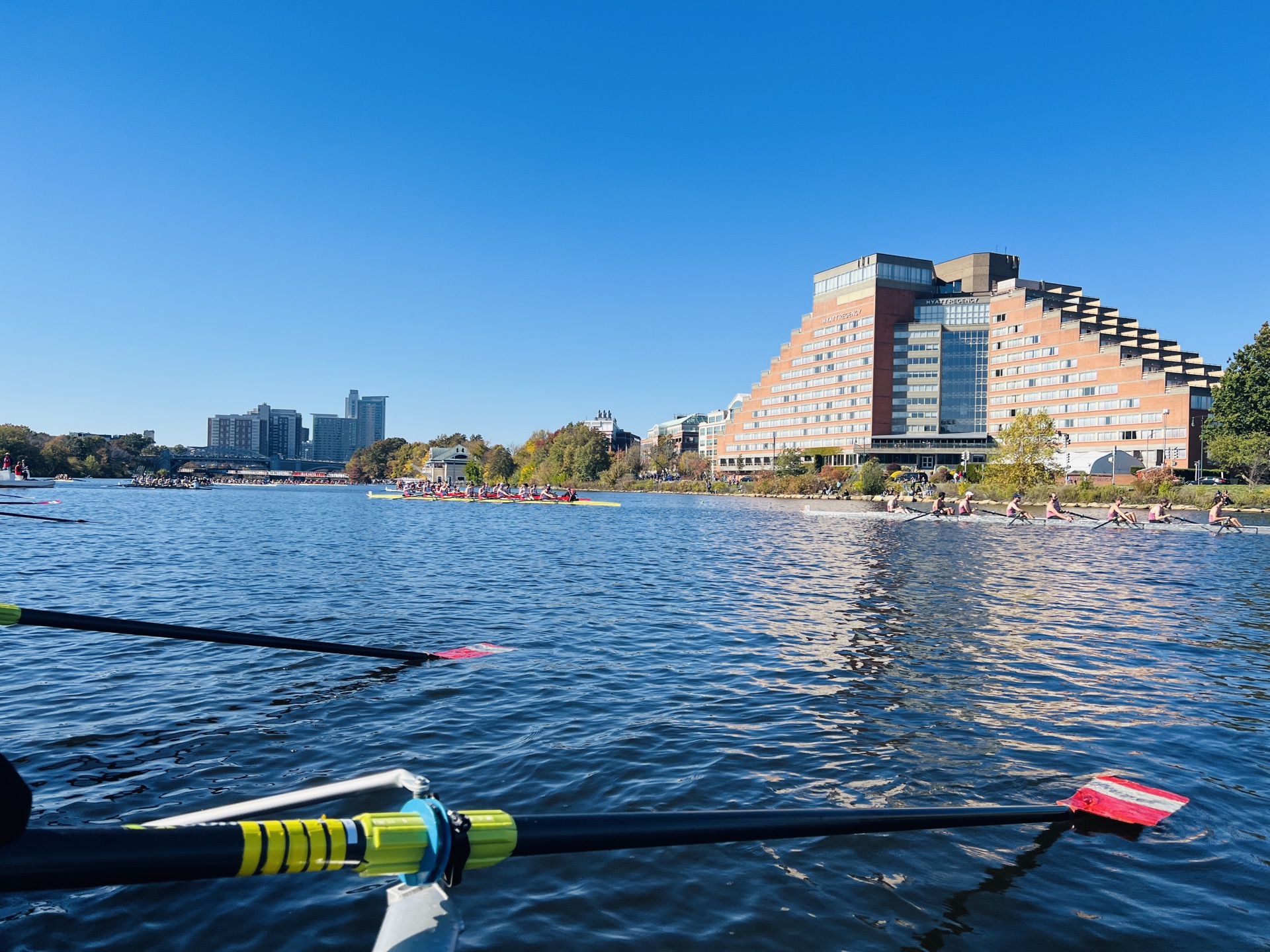
Ask anyone who has raced the Head and they'll laugh, because almost everyone has a version of this story. It's the most universal Head of the Charles experience, and nobody puts it on the website.
So, a few tips, from someone who learned the hard way.
Tips for enjoying the regatta
- Spectators: use the restrooms. You have them. Rowers don't. Enjoy this privilege.
- Rowers: hydrate wisely, and assume the wait will be longer than you think. Then add an hour.
- Walk or bike. Don't drive. Roads near the river are packed and parking is nearly impossible. (Here's our guide to parking in Cambridge if you must.)
- Check the race schedule. Events run all weekend, from youth and college crews to masters and alumni boats. Pick a few you care about and plan your spot around them.
- Dress in layers. October mornings on the river are cold, especially on the bridges, where the wind cuts through.
- Follow a crew. Find a boat with a friend in it, or just pick one you like, and walk with them along the bank. It makes the race far more fun.
- Don't skip the riverbank scene. Between races, the vendor tents, boathouses and crowds of rowers in their club colors are half the fun.
Where to stay for the Head of the Charles
The racecourse runs right between Cambridge and Boston, and the best viewing spots (Weeks, Anderson and Eliot) are all on the Cambridge side, near Harvard Square. Staying in Cambridge means you can walk to the river in the morning, skip the traffic entirely and walk back for a hot shower and dinner in Harvard Square.
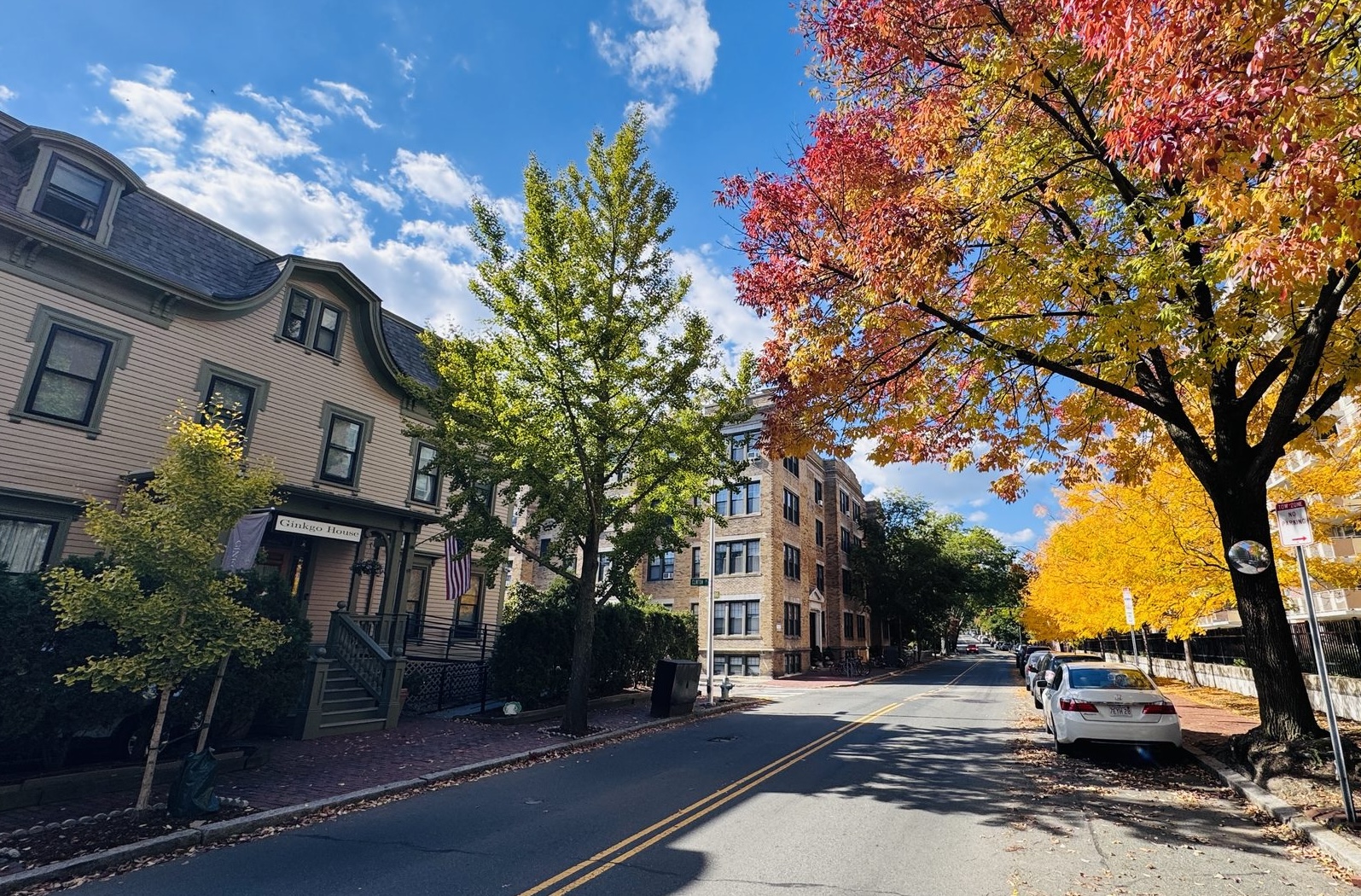
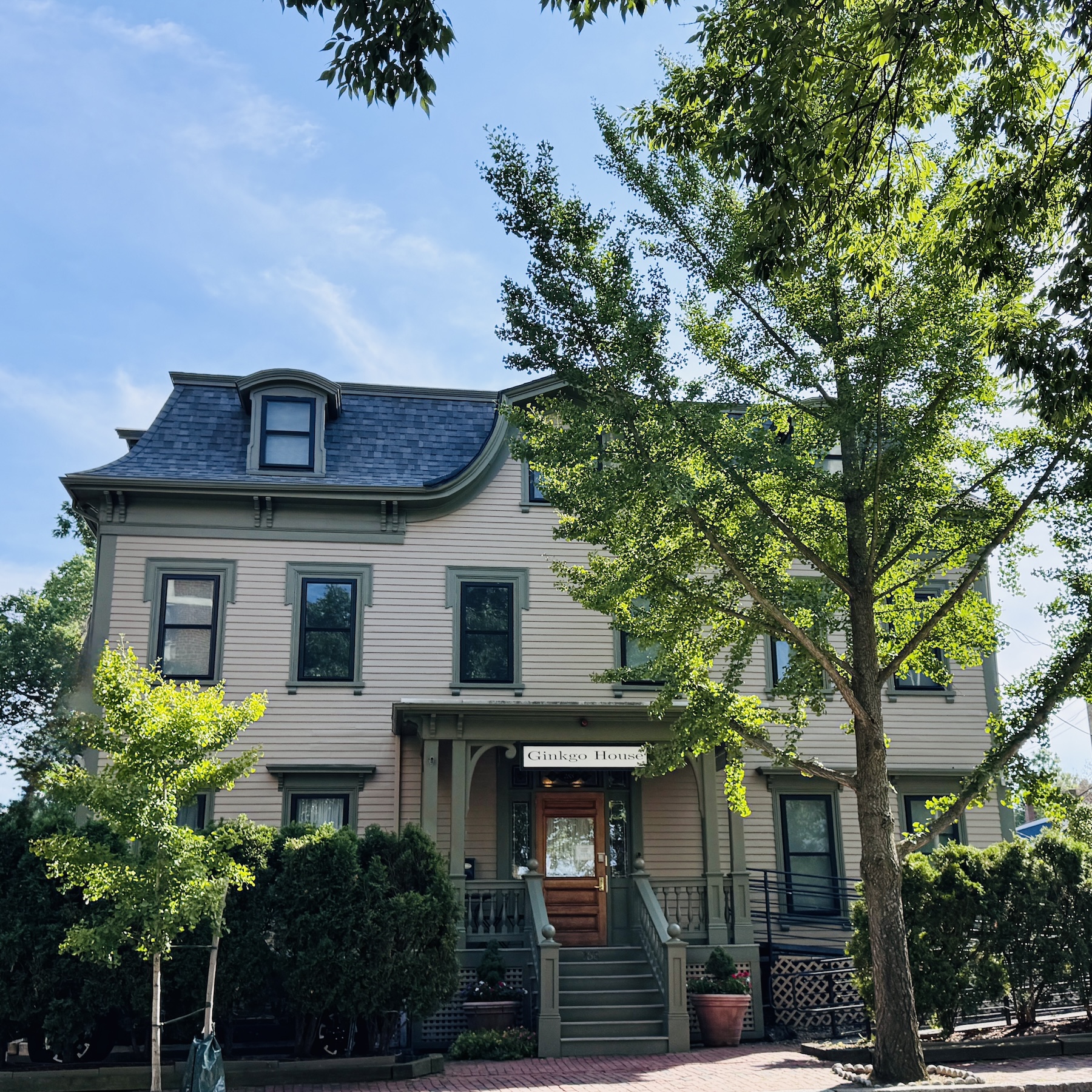
Ginkgo House is a restored 1867 boutique hotel on Harvard Street, between Harvard and Central Squares, about a 20-minute walk from the river. Regatta weekend is one of the busiest weekends of the year in Cambridge, and rooms sell out early, so if you're planning to come next October, book as soon as the dates are announced.
See you on the bridges. And spectators: please don't take the restrooms for granted.
Race photos courtesy of my crewmates.